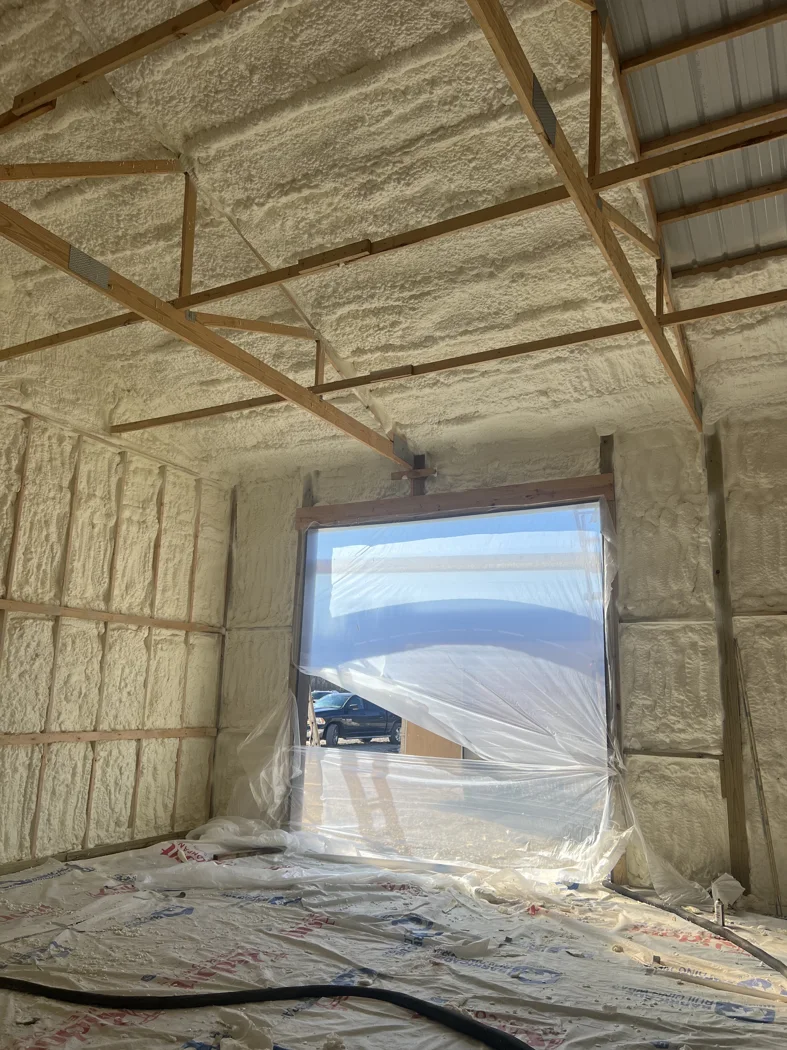
How it works
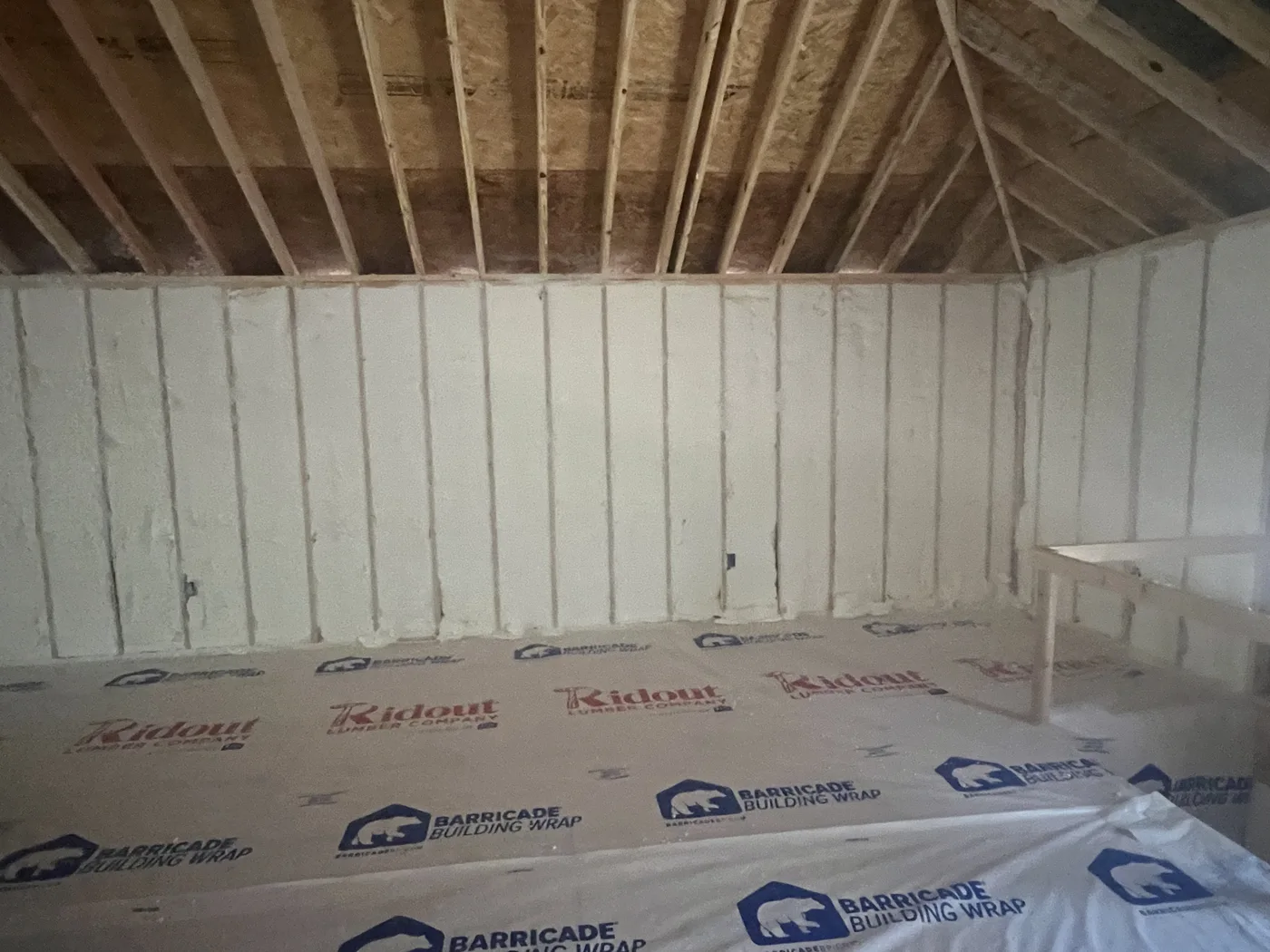
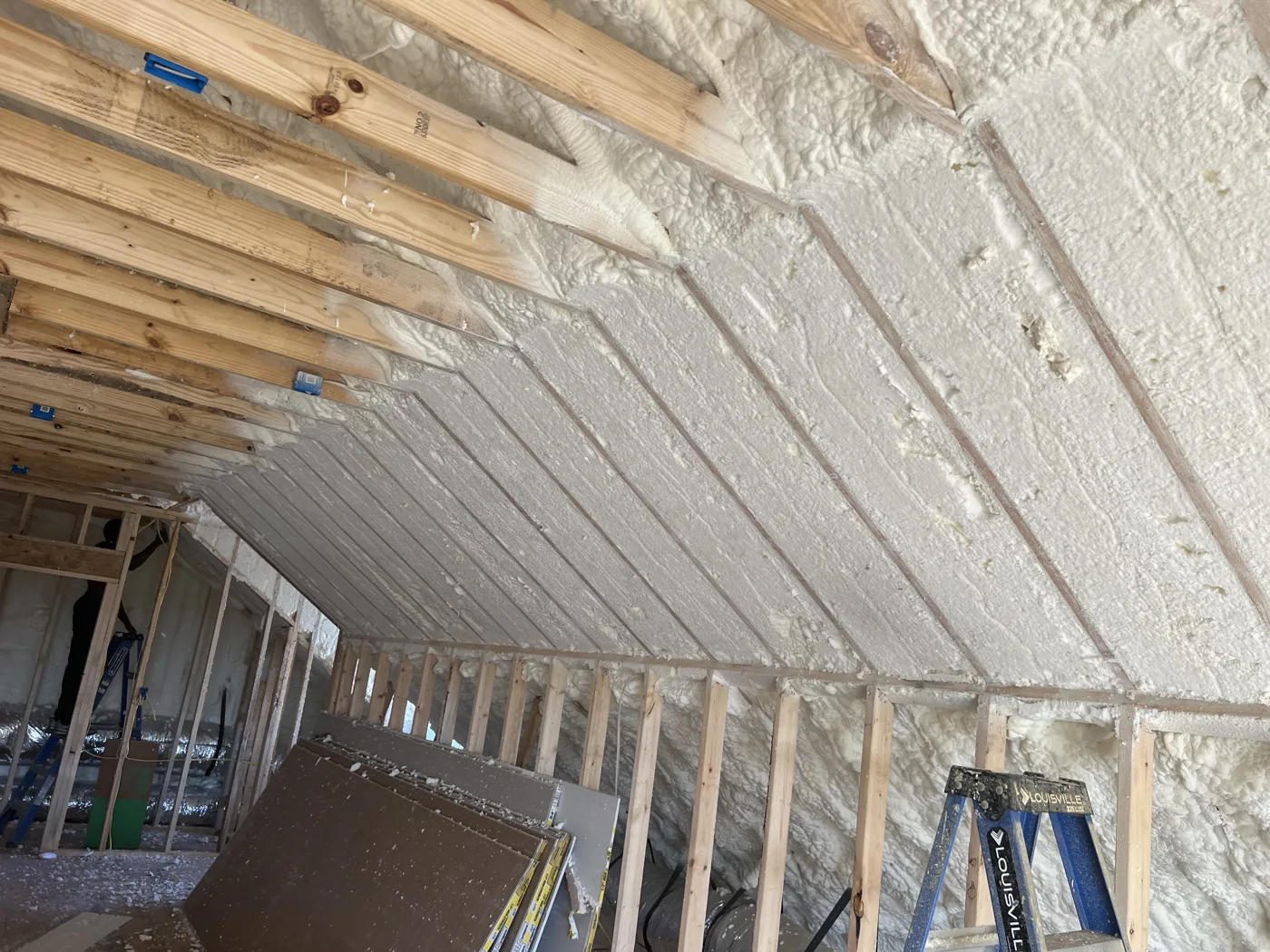
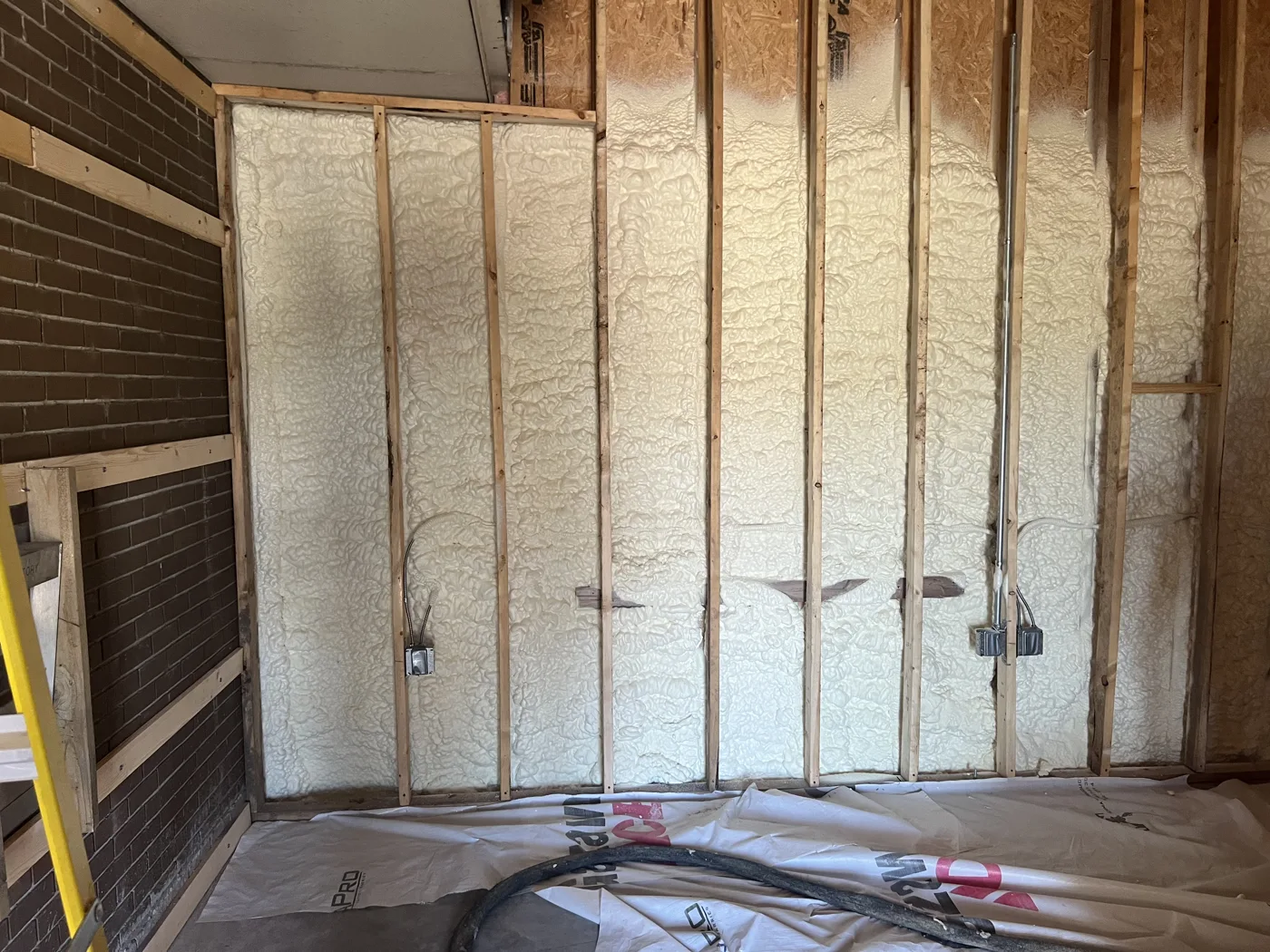
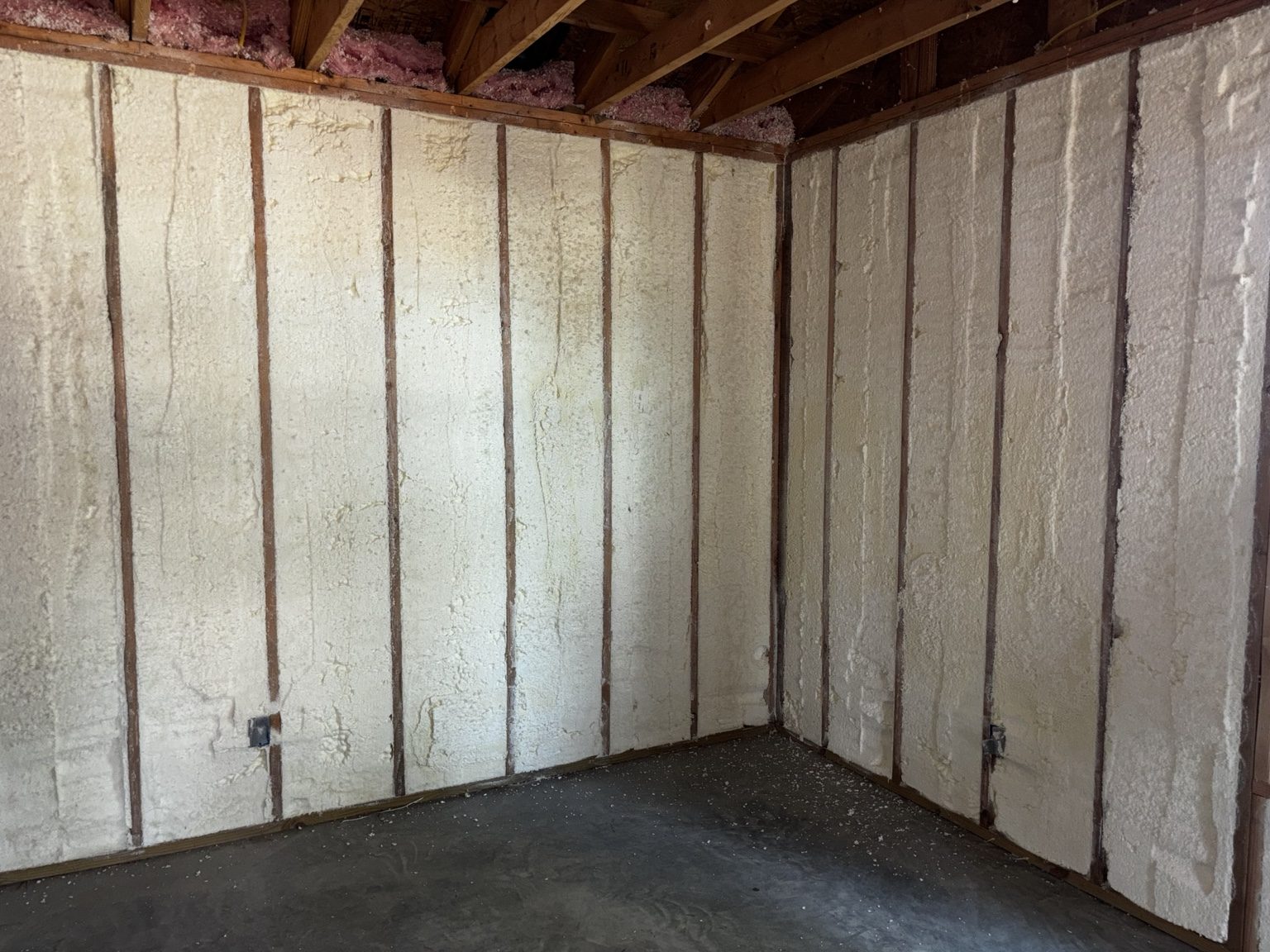
Spray polyurethane foam expands into irregular spaces and can form an air barrier at the manufacturer’s tested thickness. It is useful where drafts, complex framing or limited cavity space make conventional insulation difficult.
Choose spray foam when you want insulation and air-leakage control in the same application. It expands around framing and irregular spaces, helping your home hold conditioned air and feel more comfortable. We help you compare open-cell and closed-cell options for your walls, roofline, or crawl space, based on available depth and moisture conditions.
Images illustrate installation methods. Photographs identified as project archive images are from Insulate You’s supplied collection.
Open-cell and closed-cell options, selected for the space and installed to the specified depth.
Free on-site estimate · Same-day quotes available
Free on-site assessment — we will help you choose the right insulation.
📞 (870) 322-9802Spray polyurethane foam expands into irregular spaces and can form an air barrier at the manufacturer’s tested thickness. It is useful where drafts, complex framing or limited cavity space make conventional insulation difficult.
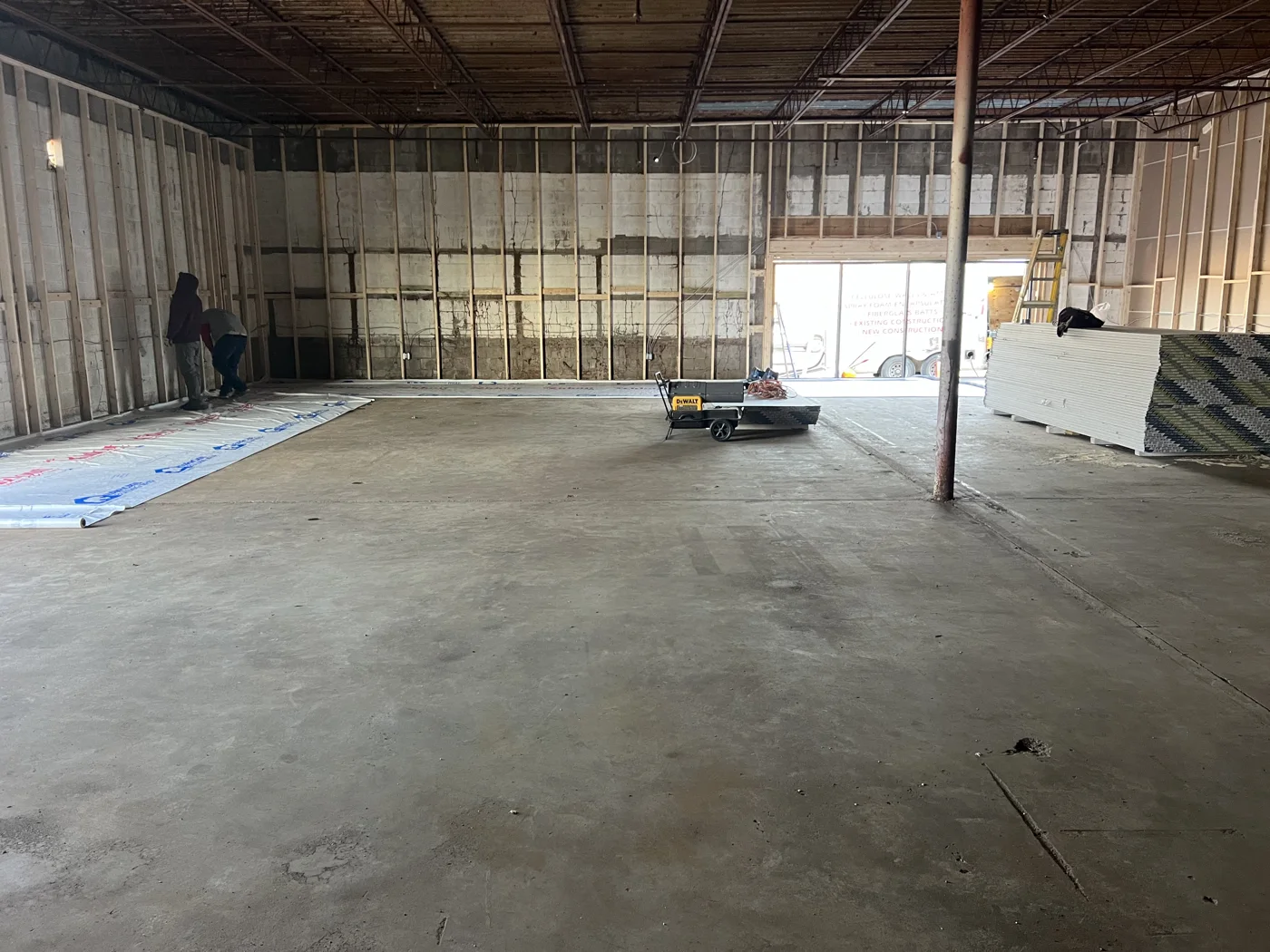
Open-cell is typically less expensive and suits many residential walls and properly designed roof assemblies. Closed-cell offers greater R-value per inch and lower vapor permeance, making it useful in shallow cavities and many metal buildings.
Foam is not a cure for roof leaks or ground moisture. Substrate condition, ventilation, fire protection and re-entry requirements must be evaluated before installation.
Yes. A designed hybrid assembly can balance air sealing, thermal performance and budget; moisture behavior must be checked.