How it works
Metal panels can become cold enough for humid indoor air to condense on them. Closed-cell foam is often selected for its high R-value per inch and lower vapor permeance at tested thicknesses.
Control heat transfer and plan for condensation.
Closed-cell foam is generally preferred for direct application to metal panels. Assess roof leaks, corrosion, ground moisture, ventilation and fire protection before selecting a system.
No. Exposed soil and other moisture sources need separate evaluation.
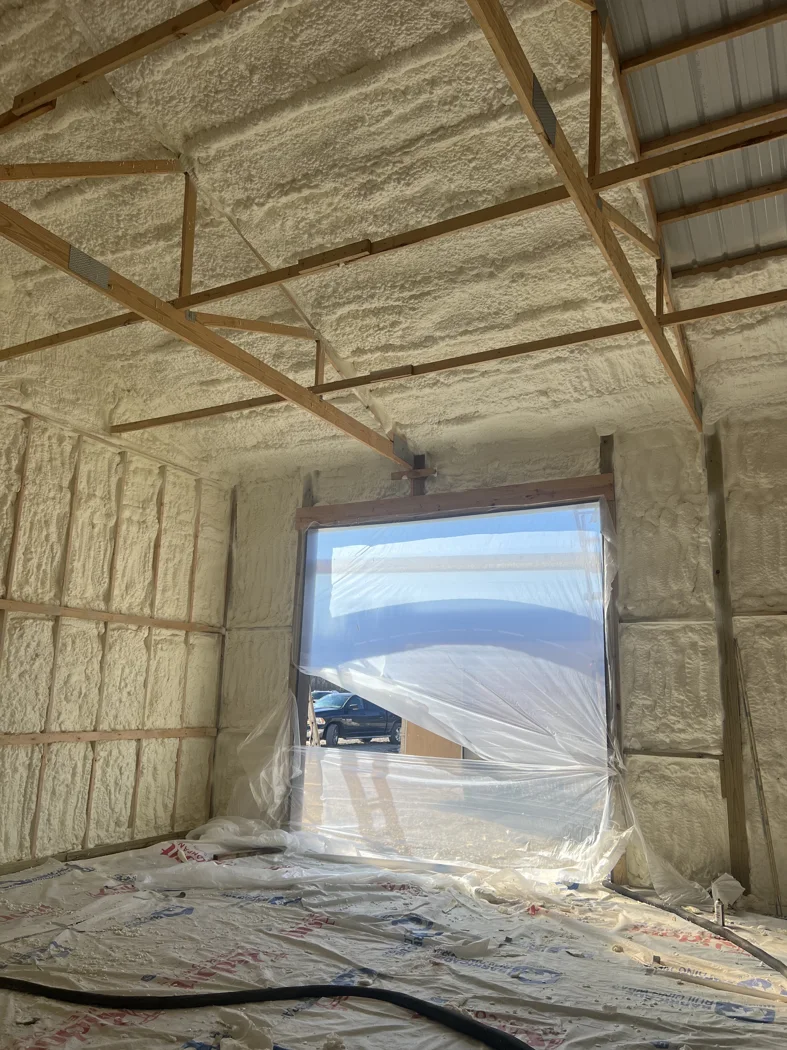
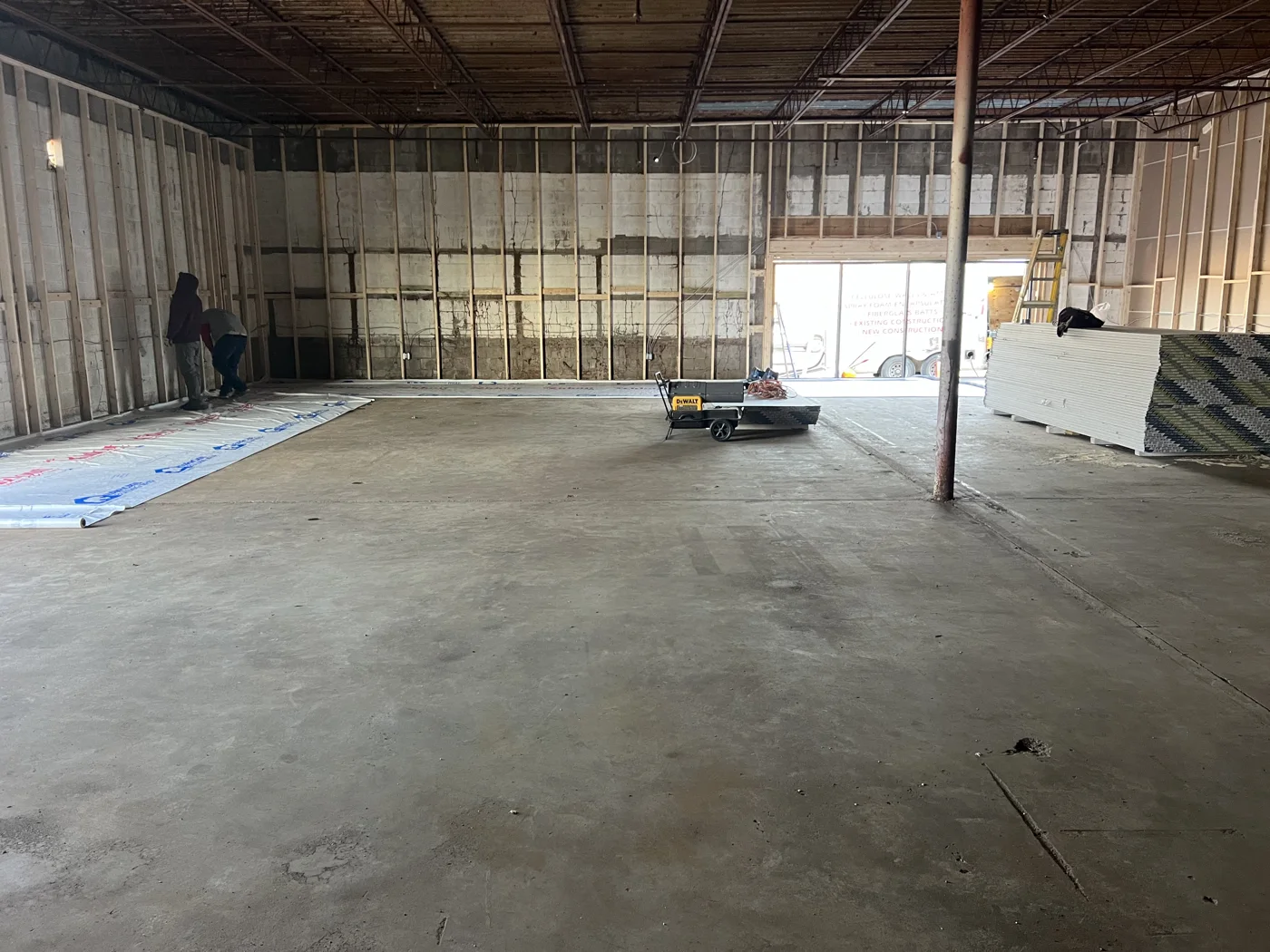
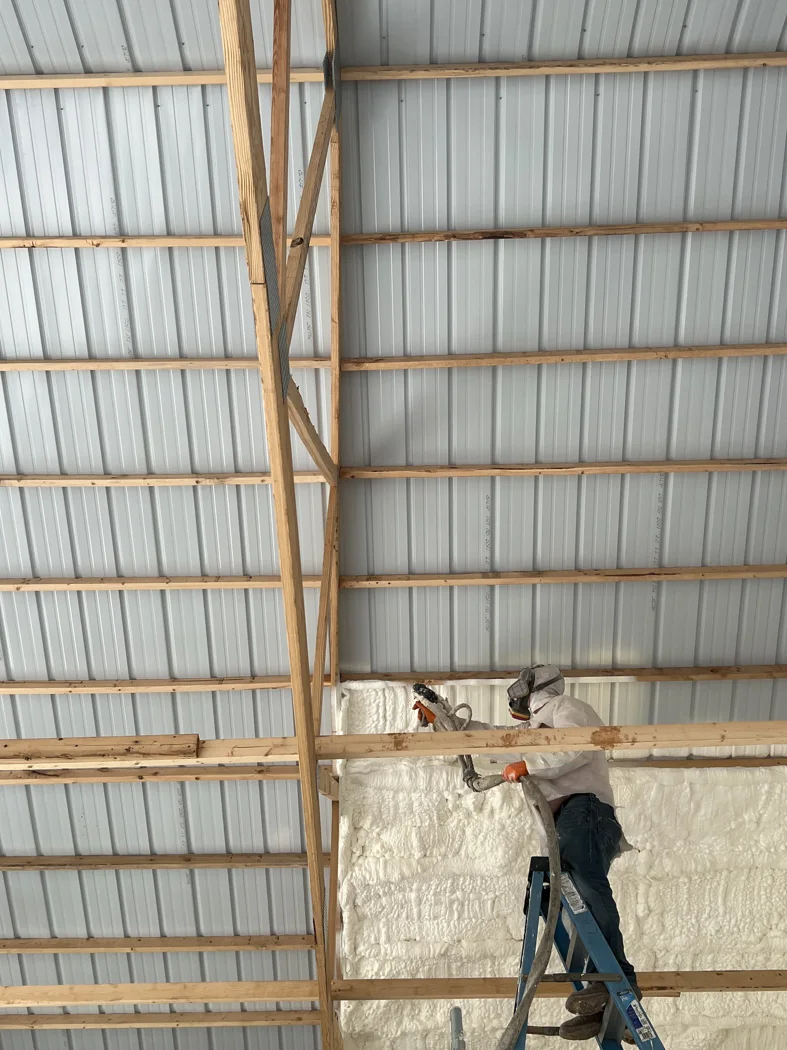
Project photographs show metal building applications. The exact foam product and thickness cannot be confirmed from photographs alone.
Metal panels can become cold enough for humid indoor air to condense on them. Closed-cell foam is often selected for its high R-value per inch and lower vapor permeance at tested thicknesses.
Open-cell foam may be suitable only in an assembly specifically designed for moisture management. A dirt-floor building also needs ground moisture evaluation; foam on the walls cannot stop moisture entering from the soil.
Check panel corrosion, leaks, adhesion, ventilation, fire protection and manufacturer compatibility. Correct existing moisture problems before covering the panels.
No. It can help control condensation in a properly designed assembly, but drainage, humidity and installation details still matter.