Insulation Buyer’s Guide | Insulate You | Jonesboro, AR
🔥 NEA Insulation Experts — FREE Energy Audit + Same-Day Quotes! ✅📞 (870) 322-9802

Choose the right insulation for your home or building

A practical guide to spray foam, cellulose and fiberglass — what each does well, where it fits and what to ask before you invest.

Start with the building, not the product

In Northeast Arkansas, hot humid summers and cold winter periods make both thermal performance and moisture management important. Choose insulation based on the assembly, available depth, air leakage, moisture exposure, code and budget. R-value measures resistance to heat flow; higher is better at equal conditions, but installation quality and thermal bridging matter.

Typical R-values below are approximate material values, not whole-wall ratings. Verify the manufacturer’s data and local code for your project.

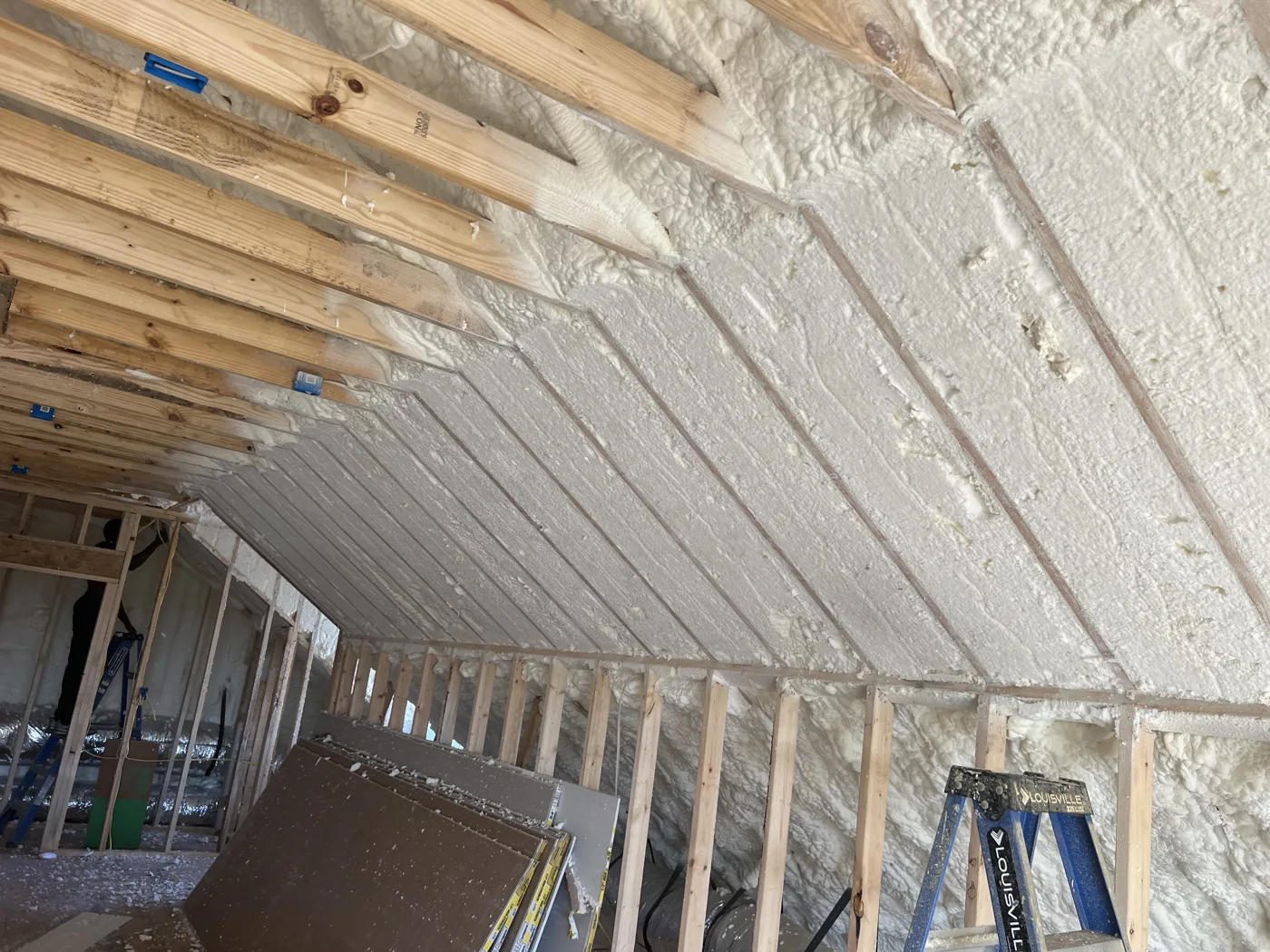
Open-cell spray foam

Spray foam applied to residential roofline
Residential spray foam application; verify product type
About R-3.5–4 per inch

Best applications

Rooflines and framed cavities where an air barrier and economical cavity fill are desired.

Why choose it?

Expands to fill irregular spaces and can reduce air leakage at tested thickness.

What to watch for

Vapor permeable; not a substitute for ground moisture control or a vapor retarder. Roof assemblies need a moisture and ventilation design.

Explore this service →
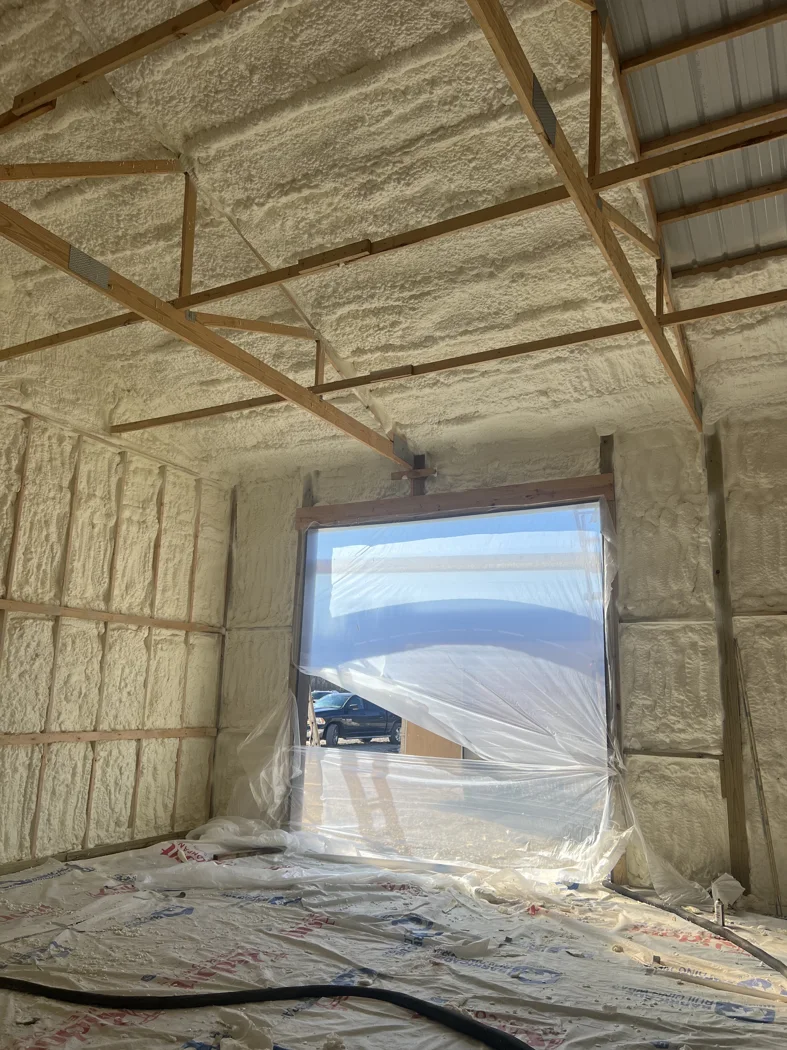
Closed-cell spray foam

Foam installed on metal building panels
Metal building application; verify specified foam type
About R-6–7 per inch

Best applications

Metal buildings, limited-depth cavities and assemblies needing higher R-value per inch.

Why choose it?

Rigid foam can provide air and vapor control at product-specific thicknesses.

What to watch for

Higher upfront cost; substrate must be suitable and dry. Address drainage, ground vapor and required fire protection separately.

Explore this service →

Blown-in cellulose

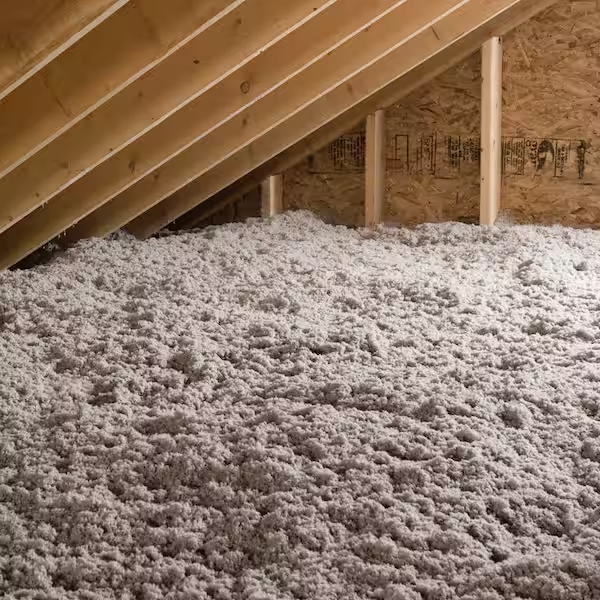
Loose-fill attic insulation
Loose-fill attic application — illustrative application
About R-3.2–3.8 per inch

Best applications

Existing vented attics and insulation top-ups.

Why choose it?

Fills around irregular framing and is often a cost-effective way to increase attic R-value.

What to watch for

Air seal first, preserve ventilation and clearances, and specify settled depth and coverage. Correct leaks before installation.

Explore this service →

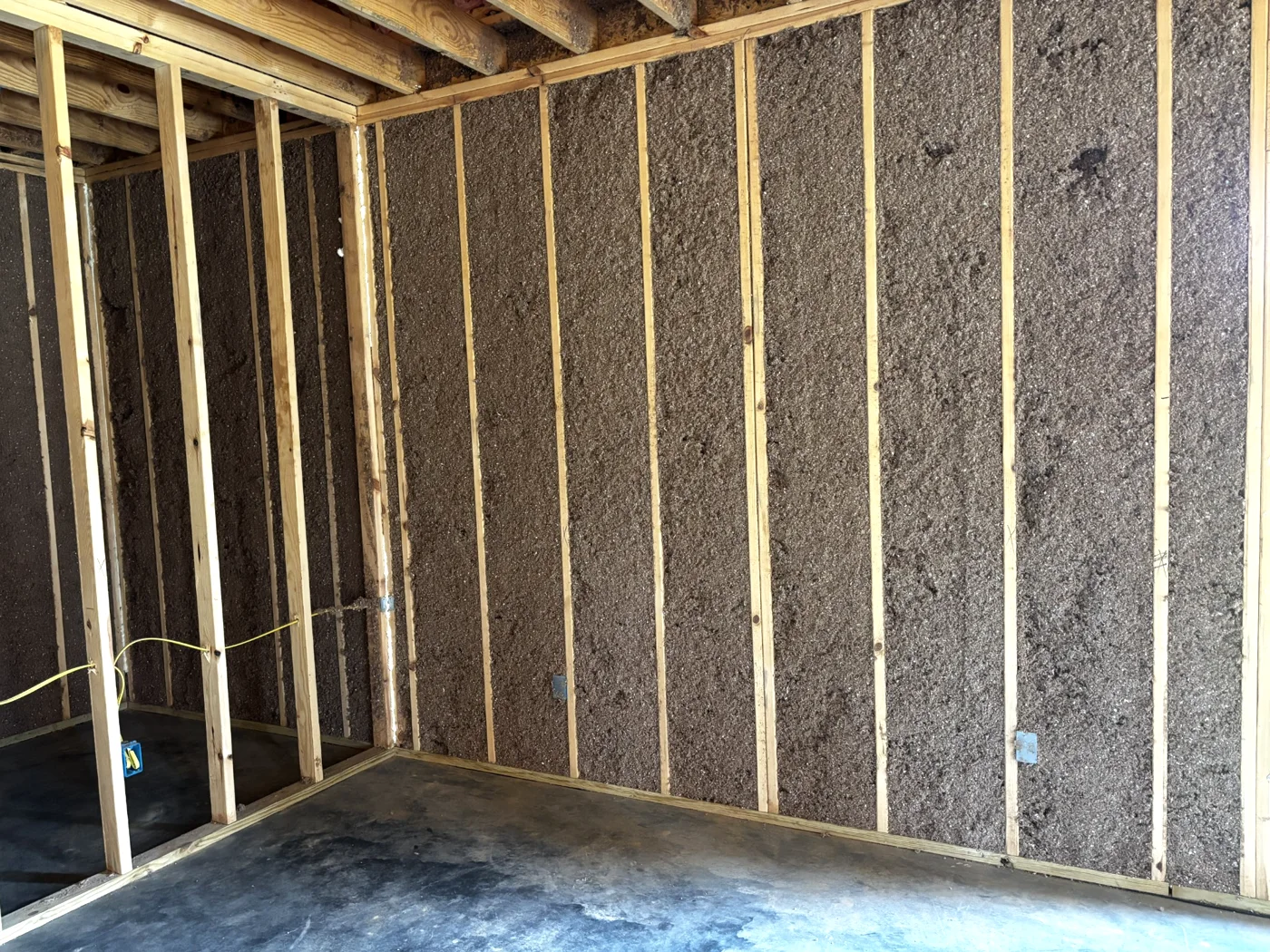
Cellulose wall insulation

Cellulose wall insulation — project gallery
About R-3.2–3.8 per inch

Best applications

New framed walls or suitable retrofit cavities.

Why choose it?

Conforms around framing and wiring; dense or spray-applied systems can improve cavity coverage and sound absorption.

What to watch for

Use the specified density and installation method; wet-applied material must dry before enclosure. Separate air and vapor control may be needed.

Explore this service →

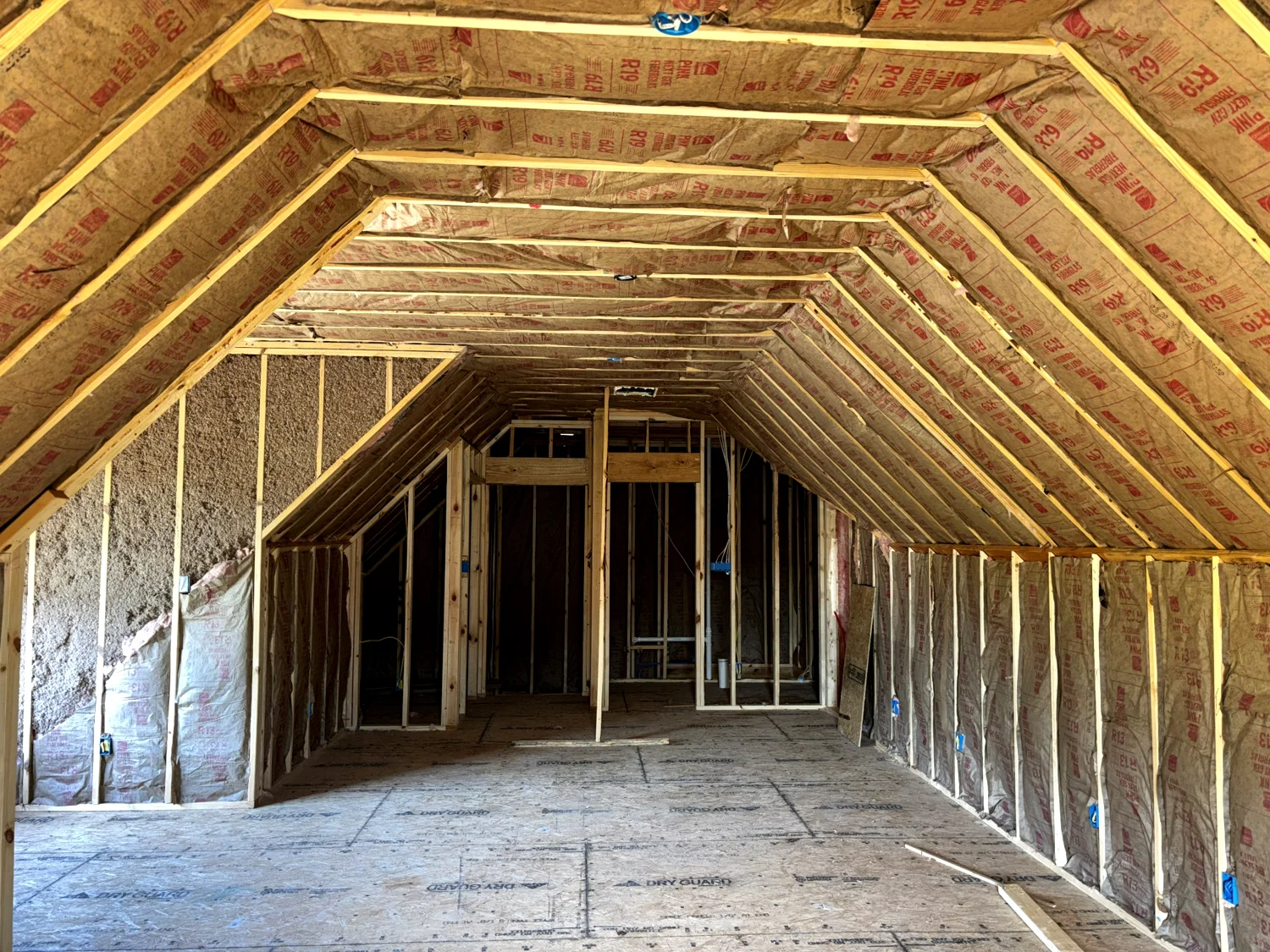
Fiberglass batts

Fiberglass batts — project gallery
About R-3–4.3 per inch

Best applications

Regular stud and joist cavities, new construction and interior sound-control partitions.

Why choose it?

Economical, readily available and easy to inspect before drywall.

What to watch for

Must fit without gaps, compression or voids. Does not stop air leakage by itself; facing and vapor control depend on assembly.

Explore this service →

Which solution fits your project?

Existing attic

Inspect for leaks, air seal and maintain ventilation. Cellulose top-ups are often economical; roofline foam is a different assembly strategy.

New home

Compare cellulose walls, batts and foam based on framing depth, energy targets, air sealing and budget.

Metal building

Evaluate condensation, ground moisture, ventilation and substrate. Closed-cell foam is often a strong candidate, but it cannot solve every moisture source.

Crawl space

Address drainage and ground vapor first; choose a compatible floor or perimeter insulation and ventilation strategy.

Compare written quotes before you sign

Ask for the exact product, installed thickness or settled depth, target R-value, coverage area, air sealing, moisture strategy, ventilation, removal and disposal, fire protection, exclusions and warranty terms. The lowest price may omit important work.

For further guidance: U.S. Department of Energy — Types of Insulation.

How to choose based on your budget and building

How it works

Start with the assembly: a vented attic, framed wall, roofline, crawl space or metal building. Then identify the main problem: heat transfer, drafts, limited depth or moisture.

Best value and applications

For a tight budget, air sealing plus blown-in cellulose is often a strong attic upgrade. Cellulose walls and batts can be economical in new construction. Open-cell foam is a lower-cost foam option; closed-cell is a premium option where its higher R-value per inch or vapor resistance is needed.

What to consider

Compare installed R-value, air barrier continuity, moisture design and total scope. Typical product R-values vary; no material guarantees a specific utility-bill reduction.

What should I choose first?

Start with an inspection and compare suitable assemblies, not just products.

Chat with Izzy!
Izzy
Izzy — Insulation ExpertOnline 24/7 · Insulate You
👋 Hi! I am Izzy, your insulation guide from Insulate You! I am here 24/7 to help.

You can also call anytime: (870) 322-9802 📞

How can I help you today?
Prefer to talk? Call (870) 322-9802